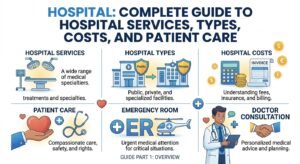
A hospital is one of the most important places in the healthcare system. When people become seriously ill, have an accident, need surgery, or require specialized medical treatment, a hospital provides the doctors, nurses, equipment, medicines, and other services needed for proper care.
However, not every hospital provides the same services. Some hospitals focus on general treatment, while others specialize in areas such as heart disease, cancer, children’s healthcare, maternity care, or emergency treatment. The cost of treatment can also vary widely depending on the hospital, treatment, location, and whether the patient has health insurance.
Understanding how a hospital works can make healthcare decisions much easier. In this guide, we will explain the main types of hospitals, hospital departments, emergency services, inpatient and outpatient care, hospital costs, health insurance, and important things to consider when choosing a hospital.
What Is a Hospital?
A hospital is a healthcare facility where trained medical professionals diagnose, treat, monitor, and care for patients. Hospitals usually have doctors from different specialties, nurses, pharmacists, technicians, and other healthcare workers working together.
A hospital may provide both short-term and long-term medical care. Some patients visit for a few hours for tests or treatment, while others stay overnight or for several days because they need continuous medical attention.
Most large hospitals have several departments and services, including emergency care, outpatient clinics, inpatient wards, operating rooms, laboratories, radiology, pharmacies, and intensive care units.
The exact services available depend on the size and type of hospital. For example, a small community hospital may provide basic emergency and inpatient services, while a large teaching hospital may offer advanced surgery, intensive care, cancer treatment, organ transplantation, and many specialist departments.
Why Are Hospitals Important?
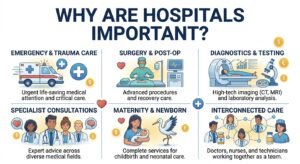
Hospitals play a central role in treating conditions that cannot always be managed in a normal clinic or doctor’s office.
A hospital can provide:
- Emergency and trauma care
- Surgery and post-surgical care
- Diagnostic testing
- Specialist consultations
- Maternity and newborn services
- Intensive care
- Inpatient treatment
- Outpatient treatment
- Pharmacy services
- Rehabilitation
- Laboratory testing
- Medical imaging
- Ambulance and emergency services
Hospitals also connect different medical professionals. A patient may need a physician, surgeon, radiologist, anesthesiologist, nurse, pharmacist, and laboratory technician during one treatment. A hospital allows these professionals to work together.
Different Types of Hospitals
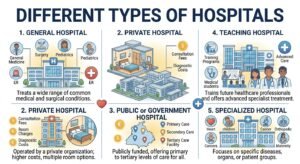
Hospitals can be divided into different categories based on their ownership, size, and medical specialty.
1. General Hospital
A general hospital treats a wide range of common medical and surgical conditions. It may have departments such as general medicine, surgery, pediatrics, gynecology, emergency medicine, radiology, and laboratory services.
General hospitals are often the first choice for patients who need hospital-based treatment but do not require a highly specialized facility.
2. Private Hospital
A private hospital is operated by a private organization or company. Private hospitals often offer multiple specialist services and may provide different room options, including private rooms and suites.
The cost of treatment at a private hospital can be higher than at a public facility, so patients should ask about consultation fees, room charges, diagnostic costs, medicines, and other medical expenses before beginning non-emergency treatment.
3. Public or Government Hospital
Government hospitals are generally funded and managed by the public sector. They are an important source of healthcare, particularly for people who may not be able to afford expensive private medical treatment.
For example, Punjab’s health system describes primary, secondary, and tertiary levels of care, with facilities ranging from basic health units to larger hospitals providing specialist and advanced services.
4. Teaching Hospital
A teaching hospital is usually connected with a medical college or university. Along with treating patients, it helps train medical students, doctors, nurses, and other healthcare professionals.
Teaching hospitals often have many departments and can provide advanced specialist treatment.
5. Specialized Hospital
A specialized hospital focuses on a particular disease, organ, patient group, or medical field.
Examples include:
- Heart hospitals
- Cancer hospitals
- Children’s hospitals
- Eye hospitals
- Orthopedic hospitals
- Maternity hospitals
- Psychiatric hospitals
- Rehabilitation hospitals
Specialized hospitals can be useful when a patient needs expert treatment for a particular condition.
Main Departments in a Hospital
A large hospital can have dozens of departments. Each department has a specific role in patient care.
Emergency Department
The emergency department handles urgent medical problems such as serious injuries, accidents, severe breathing problems, chest pain, sudden neurological symptoms, and other conditions requiring immediate attention.
Emergency departments are generally designed to operate around the clock.
Outpatient Department (OPD)
The outpatient department is where patients receive medical consultation without being admitted to the hospital.
A patient may visit the OPD for:
- A doctor’s consultation
- Follow-up appointments
- Routine examinations
- Specialist advice
- Minor treatments
- Diagnostic tests
After examination, the doctor may prescribe medicine, request tests, recommend a procedure, or admit the patient if hospital care is necessary.
Inpatient Department (IPD)
Inpatient care is provided to people who need to stay in the hospital. Patients may be admitted for surgery, serious illness, observation, recovery, or continuous treatment.
An inpatient stay can last from one night to several days or longer, depending on the medical condition.
Intensive Care Unit (ICU)
The ICU provides close monitoring and advanced medical support for seriously ill patients.
Patients in intensive care may require continuous monitoring, specialized medicines, breathing support, or other critical treatments.
Operation Theater
The operating theater is a controlled area where surgical procedures are performed. Surgical teams can include surgeons, anesthesiologists, nurses, and other trained staff.
Hospitals may have different operating rooms for different types of procedures.
Laboratory
The laboratory performs medical tests that help doctors understand what is happening inside a patient’s body.
Common tests include:
- Blood tests
- Urine tests
- Blood sugar tests
- Infection testing
- Hormone testing
- Tissue examination
- Microbiology tests
Radiology and Imaging
Radiology departments use medical imaging to help diagnose diseases and injuries.
Depending on the hospital, services may include:
- X-rays
- Ultrasound
- CT scans
- MRI
- Mammography
- Other specialized imaging
Pharmacy
The hospital pharmacy manages and supplies medicines prescribed by healthcare professionals. Some hospitals also provide pharmacy services to patients after outpatient appointments.
Maternity and Obstetrics
Maternity services support women during pregnancy, childbirth, and the period after delivery. Larger hospitals may also provide newborn and neonatal care.
Pediatrics
Pediatrics focuses on the healthcare needs of babies, children, and teenagers.
Cardiology
Cardiology deals with diseases and conditions involving the heart and blood vessels.
Orthopedics
Orthopedic departments treat problems involving bones, joints, muscles, ligaments, and related structures.
A modern hospital may also have departments for dermatology, neurology, nephrology, urology, ENT, ophthalmology, psychiatry, pulmonology, oncology, and many other specialties. Hospital department lists published by healthcare institutions show how broad these specialist services can be.
Inpatient vs. Outpatient Care
One of the easiest ways to understand hospital services is to separate them into inpatient and outpatient care.
Outpatient care means the patient receives treatment without staying overnight. For example, someone may visit a hospital, see a specialist, have an X-ray, and return home the same day.
Inpatient care means the patient is admitted and stays in the hospital for treatment or monitoring.
For example, a person needing major surgery may be admitted to the hospital, undergo the procedure, stay for recovery, and then be discharged after the medical team determines that it is safe to go home.
Emergency Care: When Should You Go to a Hospital?
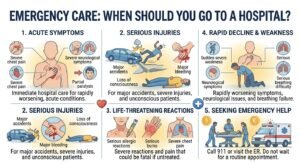
Not every health problem requires an emergency department. However, some symptoms can indicate a serious or life-threatening condition.
Emergency medical attention may be necessary for situations such as:
- Severe chest pain
- Serious breathing difficulty
- Major bleeding
- Severe injuries
- Loss of consciousness
- Serious burns
- Major accidents
- Sudden severe weakness or neurological symptoms
- Serious allergic reactions
- Other rapidly worsening conditions
If you believe someone is experiencing a medical emergency, seek emergency medical help rather than waiting for a routine appointment.
How Much Does Hospital Treatment Cost?
Hospital costs can vary significantly. There is no single price for hospital treatment because the final bill depends on many factors.
Important factors include:
- Type of treatment
- Doctor or specialist fees
- Hospital location
- Room type
- Number of days admitted
- Laboratory tests
- Medical imaging
- Surgery
- Medicines
- Medical equipment
- Emergency services
- Follow-up care
A simple outpatient consultation may cost relatively little, while major surgery or a long hospital stay can result in a much larger medical bill.
This is why patients should ask for an estimated cost before planned treatment whenever possible.
Health Insurance and Hospital Bills
Health insurance can help protect individuals and families from large unexpected medical expenses. Depending on the policy, insurance may cover some hospital services, surgeries, emergency treatment, diagnostic tests, medicines, or other eligible healthcare costs.
However, health insurance policies are not all the same.
Before receiving treatment, patients should check:
- Whether the hospital is in the insurance network
- What services are covered
- Annual coverage limits
- Deductibles
- Copayments
- Waiting periods
- Exclusions
- Pre-authorization requirements
- Emergency coverage
- Room limits
For expensive procedures, it is especially important to understand the policy before treatment begins.
Patients should also remember that having insurance does not necessarily mean every hospital expense will be paid by the insurer. Some services may be excluded or require the patient to pay part of the bill.
Hospital Insurance: What Should You Check?
When comparing hospital insurance or broader health insurance plans, do not choose a policy based only on the monthly premium.
A cheaper plan may have lower coverage limits or more exclusions. A slightly more expensive plan may provide better protection for major medical expenses.
Look at the complete policy and compare:
- Hospitalization coverage
- Emergency treatment
- Surgery coverage
- Diagnostic testing
- Specialist consultations
- Prescription medicine coverage
- Network hospitals
- Deductibles and copayments
- Annual limits
- Exclusions and waiting periods
The right policy depends on your healthcare needs, financial situation, location, and the type of medical services you expect to use.
How to Choose the Right Hospital
Choosing a hospital is an important decision, especially when treatment is planned.
Here are some factors worth considering.
Medical Services
First, check whether the hospital provides the treatment or specialty you need. A hospital may have an excellent reputation but still not be the right choice if it does not have the necessary specialist or equipment.
Qualified Medical Staff
Look for qualified doctors, nurses, technicians, and other healthcare professionals. For complex treatment, experience in the specific procedure or condition can be particularly important.
Emergency Services
If you have a condition that could require urgent care, check whether the hospital has a properly equipped emergency department.
Diagnostic Facilities
Having laboratory and imaging services in the same hospital can make diagnosis and treatment more convenient.
Hospital Cleanliness and Safety
Clean facilities and proper infection-control practices are important parts of safe patient care. Patients should pay attention to general cleanliness and the hospital’s approach to hygiene.
Insurance Network
If you have health insurance, check whether the hospital accepts your insurance plan. Using an in-network hospital may reduce your out-of-pocket medical expenses, depending on your policy.
Cost and Transparency
Ask about treatment costs before planned procedures. Find out whether the quoted price includes doctor fees, room charges, medicines, tests, and follow-up services.
What Happens When You Are Admitted to a Hospital?
Hospital admission normally begins with registration and an initial medical assessment.
The healthcare team may:
- Record your personal and medical information.
- Check your symptoms and vital signs.
- Review previous medical records.
- Perform necessary tests.
- Decide whether admission is required.
- Assign a room or hospital bed.
- Develop a treatment plan.
- Monitor your condition during the stay.
The exact process differs between hospitals and depends on the patient’s medical condition.
What Happens When You Leave the Hospital?
When the doctor determines that a patient is ready to leave, the hospital begins the discharge process.
The patient may receive:
- A discharge summary
- Prescriptions
- Follow-up instructions
- Information about warning signs
- Details of future appointments
- Instructions for wound care or medication
- Information about additional tests
Before leaving, make sure you understand which medicines to take, when to return for follow-up, and what symptoms require immediate medical attention.
How Technology Is Changing Hospitals
Modern hospitals are increasingly using digital technology to improve patient care and hospital operations.
Electronic medical records can help healthcare professionals access patient information. Hospitals are also using digital monitoring systems, telemedicine, artificial intelligence tools, and advanced diagnostic technologies.
Recent hospital technology developments include AI-assisted radiology, wearable monitoring devices, virtual nursing support, and systems designed to reduce administrative workload.
Technology can make healthcare more efficient, but it should support qualified healthcare professionals rather than replace appropriate medical judgment.
Hospital Safety and Patient Rights
Patients should feel comfortable asking questions about their treatment. Before a planned procedure, ask the healthcare team to explain what will happen, why the treatment is recommended, possible risks, expected benefits, and available alternatives.
Patients should also keep copies of important medical documents, prescriptions, test reports, and discharge instructions.
If something about your treatment or bill is unclear, ask the hospital staff for an explanation instead of making assumptions.
Public vs. Private Hospital: Which Is Better?
There is no universal answer.
A public hospital may be a good option for people looking for affordable healthcare and access to a broad public healthcare system. A private hospital may offer more room choices, shorter waiting times, or additional convenience, but costs can be higher.
The best choice depends on:
- Your medical condition
- Urgency
- Budget
- Insurance coverage
- Required specialty
- Available facilities
- Location
- Doctor availability
The biggest hospital is not automatically the best hospital for every patient.
Conclusion
A hospital is much more than a building where doctors treat sick people. It is a complete healthcare environment where emergency teams, doctors, nurses, surgeons, pharmacists, laboratory technicians, radiologists, and many other professionals work together.
Understanding the difference between hospital types, departments, inpatient and outpatient services, emergency care, hospital costs, and health insurance can help you make better healthcare decisions.
Before choosing a hospital for planned treatment, compare its medical services, qualified staff, diagnostic facilities, emergency care, costs, and insurance network. For emergencies, however, getting timely medical attention should be the priority.
Most importantly, never choose a hospital only because it is famous or expensive. Choose a facility that matches your medical needs and provides the appropriate level of care.